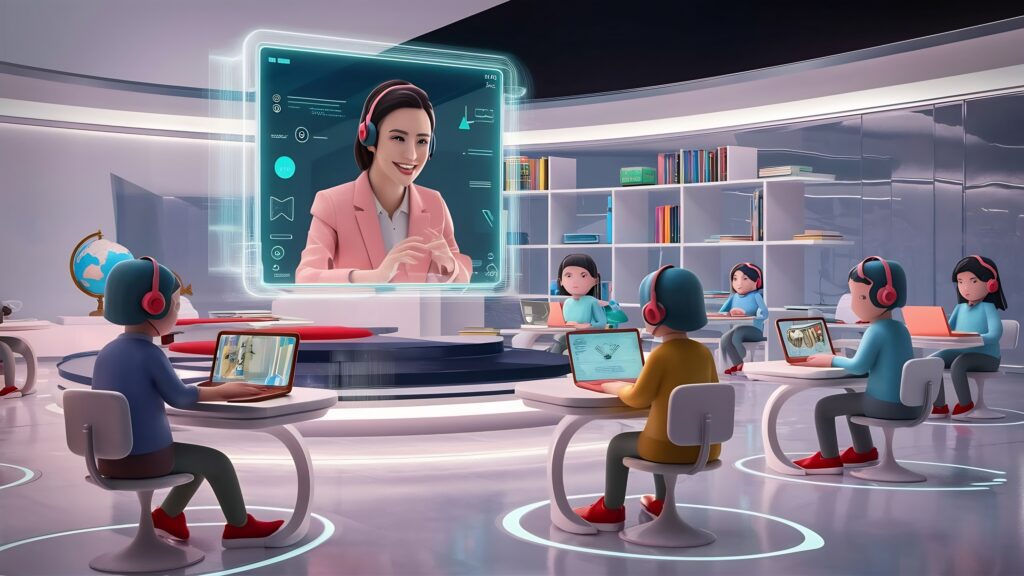
The education sector is experiencing one of its most significant transformations in history. In 2025, the global rise of AI tutors, virtual classrooms, and immersive e-learning environments has made quality education more accessible than ever before.
AI-driven platforms can now assess a student’s learning style, provide personalized feedback, and recommend adaptive study plans. Schools and universities are using VR and AR technology to simulate laboratory experiments, historical events, and collaborative projects. This has bridged the gap between theory and practice, especially in remote or underserved regions.
Global institutions like UNESCO and the World Bank are promoting “digital equity” to ensure that every child has access to education tools regardless of geography or income. Meanwhile, major EdTech startups are emerging in Asia and Africa, democratizing learning through mobile apps and online micro-degrees.
Challenges remain—particularly regarding screen fatigue, privacy, and internet accessibility—but progress is undeniable. Education is no longer confined to classrooms; it is now global, interactive, and powered by intelligent technology. The next generation of learners is being shaped by innovation that knows no borders.



